

Leveraging SkillsFuture Credits for Your Career Pivot
Learn how to maximize government funding for upskilling. We break down the application process and best practices for using your credits strategically.
Discover how Workforce Singapore assessments reveal your strengths, identify growth areas, and shape your career transition strategy with actionable insights.

When you’re thinking about changing careers, you need to know where you actually stand. It’s not just about guessing your strengths or hoping your skills match what employers want. That’s where Workforce Singapore (WSG) skills assessments come in. They’re structured evaluations designed to measure your technical abilities, soft skills, and potential for growth in specific career areas.
We’ve seen people take these assessments and suddenly have clarity about career paths they’d never considered. One client discovered she had stronger analytical skills than she realized, which opened doors to data roles she’d overlooked. The assessment wasn’t magic — it just made visible what was already there.
Key point: WSG assessments aren’t pass-fail tests. They’re diagnostic tools that map your capabilities against real job market demands. The results show exactly where you’re competitive and where you might need development.
The assessment process isn’t complicated, but it’s thorough. Most WSG evaluations combine multiple methods — practical tests, knowledge checks, and competency interviews. You’re not sitting in a sterile exam room. Instead, you’re working through realistic scenarios that match actual job tasks.
Here’s what typically happens: First, you’ll complete a technical assessment relevant to your target role. If you’re moving into project management, you might work through scheduling scenarios. For technical roles, you could solve real coding problems or analyze data sets. Then comes the competency evaluation — this measures soft skills like communication, problem-solving, and adaptability through structured interviews or scenario responses.
Meet with an assessor to discuss your target role and career goals. Takes about 30 minutes.
Complete practical tests relevant to your field. Usually 1-2 hours depending on complexity.
Interview and scenario-based assessments measuring soft skills. About 45 minutes.
Receive detailed report with strengths, gaps, and personalized upskilling recommendations.

WSG skills assessments provide valuable insights into your current capabilities and development areas. However, assessment results should be viewed as one input among many when planning your career transition. Results don’t determine your future potential — they highlight where you stand today. Individual circumstances vary significantly, and outcomes depend on many factors including your effort, learning approach, market conditions, and opportunity access. We recommend discussing your assessment results with a career coach to develop a comprehensive transition strategy tailored to your specific situation.
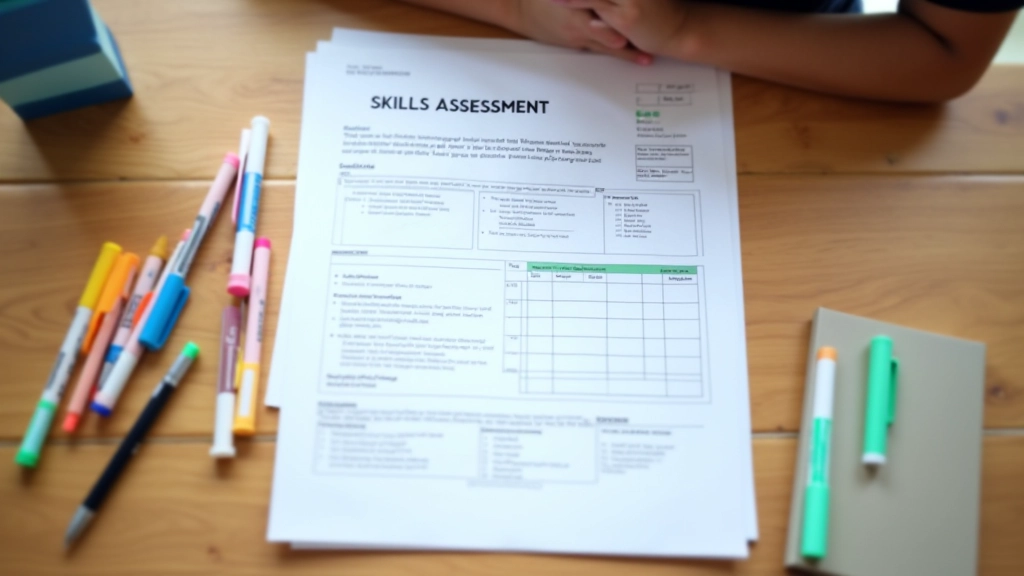
The report you’ll receive isn’t just a bunch of scores. It’s a detailed map of your capabilities. You’ll see technical skill ratings, competency levels, and honestly — areas where you’re not yet competitive for your target role. Don’t skip past those gaps. They’re the most valuable part of the assessment because they show exactly what you need to develop.
Most reports use a proficiency scale — usually 1-5 or similar — that shows how you compare to industry standards for your target role. A score of 3 might mean “competent but needs strengthening.” A 4 means “strong, ready for most situations.” The assessor will explain what each level means in practical terms, not just as numbers.
Having the assessment report is step one. Turning it into actual career progress is where the real work begins. You’ll need a plan. Don’t just file the report away — use it as your development blueprint.
Here’s what we recommend: Pick 2-3 priority areas from your assessment gaps. Trying to fix everything at once is overwhelming and ineffective. Instead, focus on the skills that matter most for your immediate career goals. If you’re aiming for a project management role and the assessment shows weak stakeholder management skills, that’s priority one. Timeline matters too. Set realistic deadlines — 3-6 months for foundational skills, 6-12 months for advanced competencies.
Enroll in SkillsFuture courses targeting your top 2 priority gaps. Take advantage of government funding if you qualify.
Apply new skills in real projects. Seek stretch assignments or volunteer roles where you can practice in lower-risk environments.
Complete advanced certifications if needed. Build a portfolio or case studies demonstrating your improved capabilities.


Here’s something people often miss: assessments don’t just show gaps. They also reveal your competitive advantages. If your assessment shows strong communication and teamwork skills but weaker technical knowledge, that tells you something important about which roles suit you best. Maybe you’re better positioned for technical program management than individual contributor roles.
Use your assessment strategically when job hunting. When you apply for positions, reference your assessment results if they’re strong. “WSG assessment confirms advanced project coordination capabilities” carries weight with employers who understand these evaluations. You’re not just claiming skills — you’ve got third-party validation.
We’ve also seen people use their assessment results when negotiating career moves internally. Instead of saying “I want a promotion,” you’re saying “My recent WSG assessment shows I’ve developed advanced leadership competencies and am ready for management responsibility.” It’s a much stronger position.
A WSG skills assessment won’t make your career decision for you. What it will do is give you honest, detailed information about where you stand today. That clarity is worth everything. You’re not guessing anymore. You’re not wondering if your skills are actually competitive. You know.
The real power comes from what you do next. Take those results seriously. Build your development plan. Get uncomfortable learning new things. Connect with mentors and peers who’ve navigated similar transitions. Your assessment shows the destination — your effort gets you there.
Combine your WSG assessment results with personal branding and strategic networking to accelerate your transition.
Learn About Personal Branding for Career Changers